
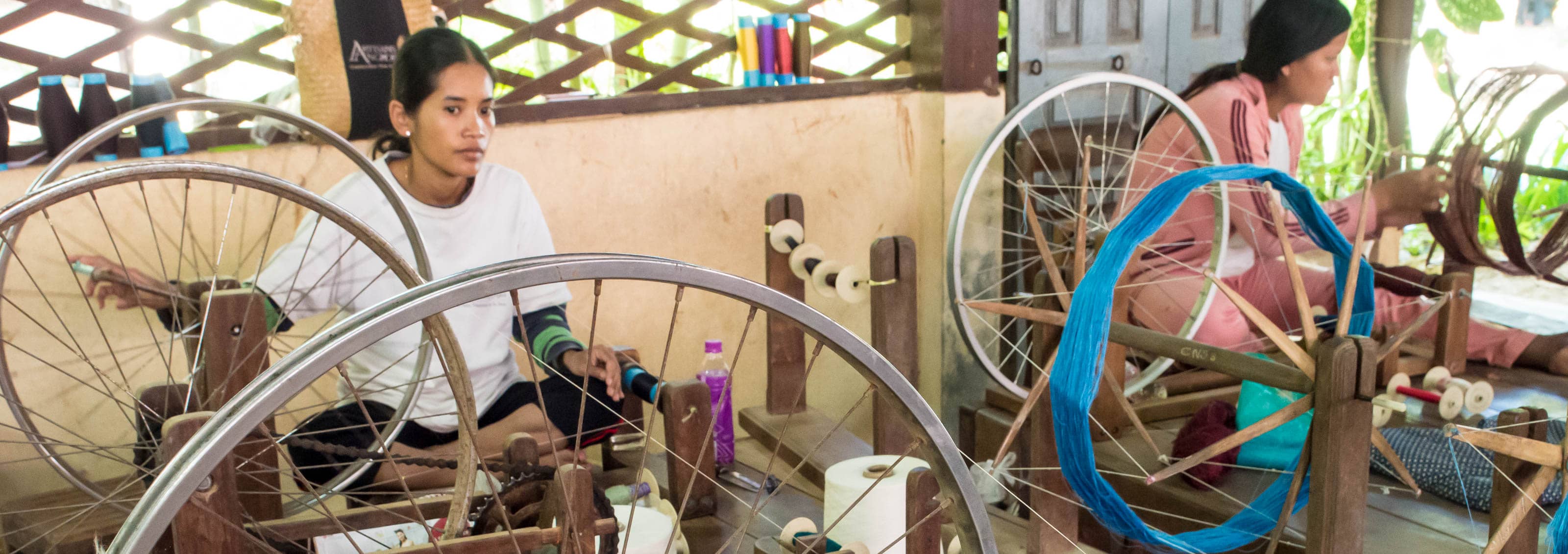
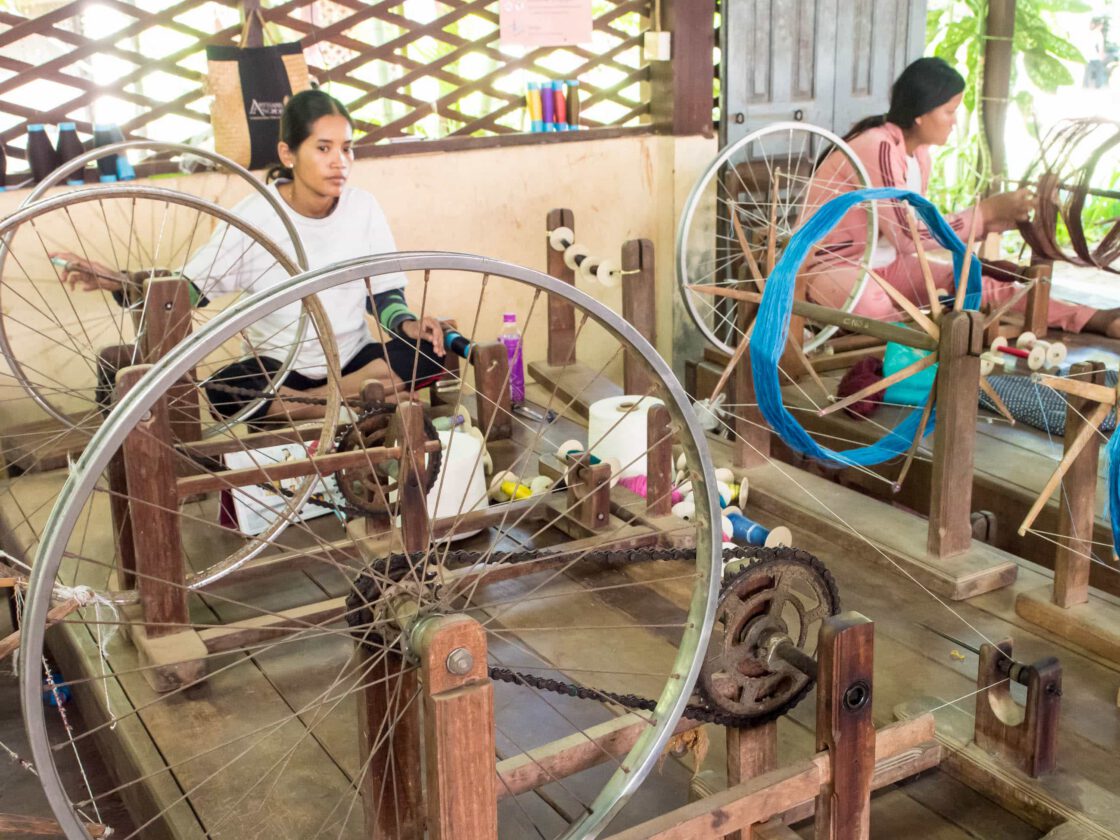
In affluent Western countries, repurposing or recycling things has become a trend in order to avoid adding more trash to landfills. In the parts of Southeast Asia that we’ve visited, we’ve also seen old objects being put to new uses, but here it’s a vital way to make existing resources go farther.
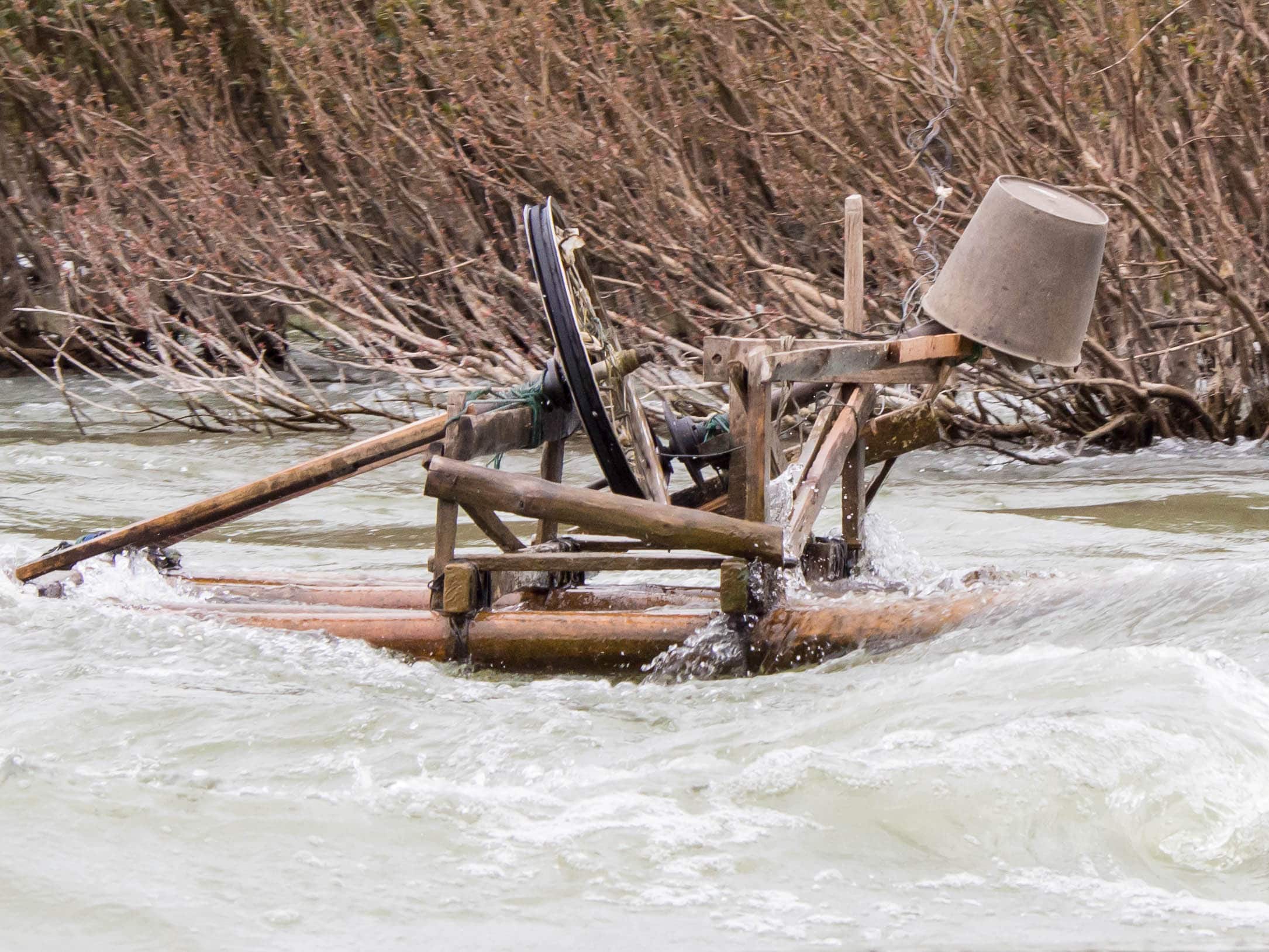
Examples of such ingenuity abound: metal bicycle wheels (minus the tires) being used as spinning wheels or in tiny makeshift hydropower schemes, in which a wheel hung in the rapids of a river delivers power along a single thin wire to a village house.
Old plastic bottles are especially versatile. Tied to fish traps, they float like buoys to mark the location of the traps. Used drink bottles can also get a new life holding petrol at roadside stands, or serving as little planters for starting onion seedlings, or storing a village family’s production of fermented-rice alcohol. Hung over the end of a water pump, they can act as a spigot.
Likewise, old plastic bags, flapping on the end of a stick, are good for scaring birds away from rice fields or keeping flies away from food in a market stall. And big tarp-like advertising banners for beer or ice cream or cell phones, after they’re done hanging in front of shops or bars, work well as sun shades on boats or rain flaps on tuk-tuks.
Metal and rubber, in particular, are resources too valuable to discard. We’ve seen casings from some of the bombs dropped on Laos in the 1960s and 1970s made into benches or planters. Aluminum from bombs has been beaten into utensils and small decorative objects sold at street markets. In one village, we saw old mortar tubes plunged into the ground to hold a sandy bank of soil in place.

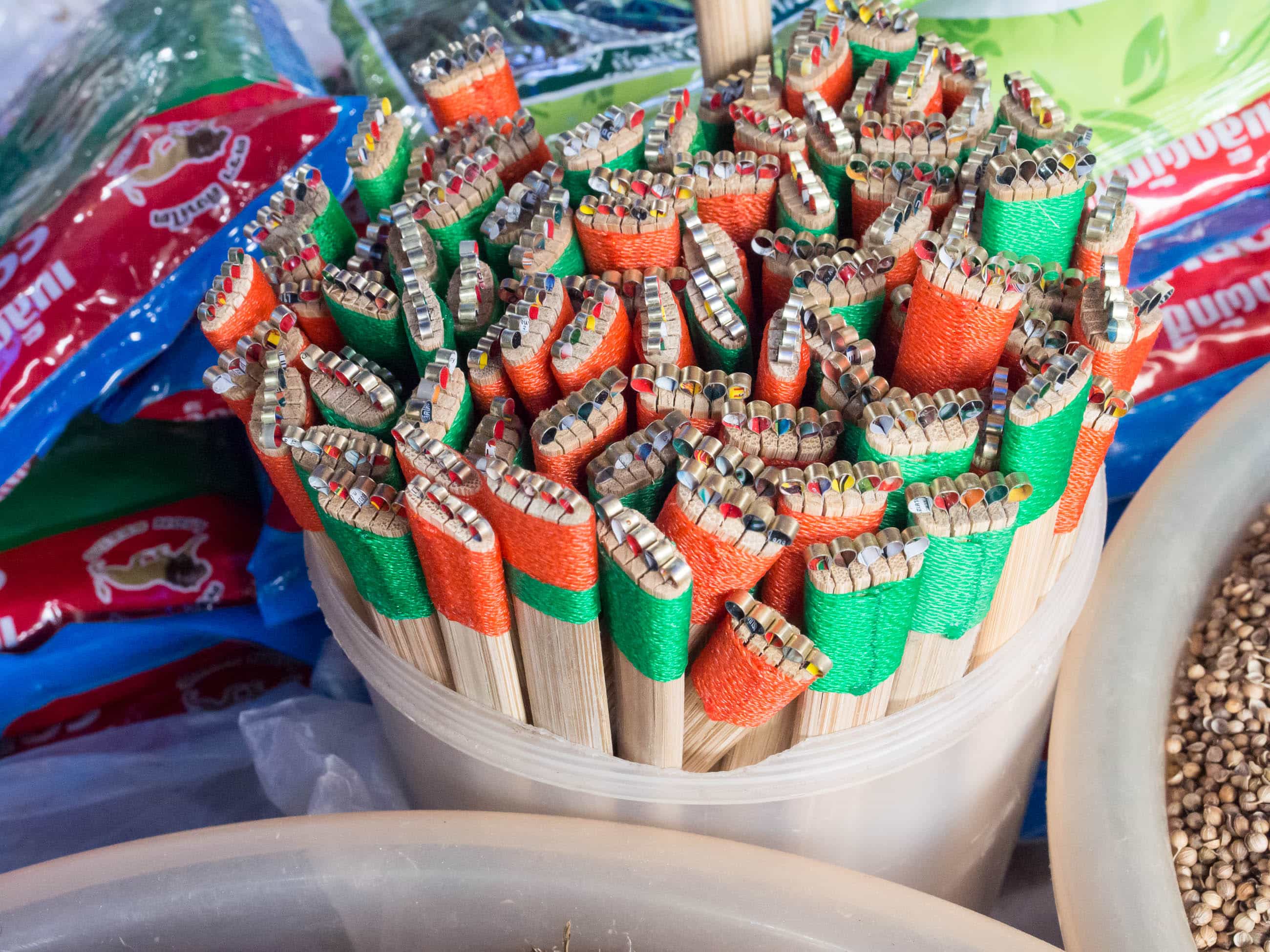
On a smaller scale, strips from old soda cans can be bent and embedded in bamboo handles to make tools for grating fruits and vegetables. Many of the squat round trash bins that dot city streets in Cambodia and Laos are made of rubber (perhaps from old tires), with a flat rubber cover on top.
As in other poor countries, there’s an active trade here in recycling used bottles, cans, and cardboard. We frequently see people roaming the streets pushing handcarts or carrying large bags to collect such objects. For the individuals who do it, it’s a hard, dirty, and low-earning job. But for society as a whole, it makes for cleaner streets and a more efficient use of materials.
