Years from now, when I remember this trip to Morocco, my most intense memories will be from Fes. A city of 1.2 million people spread over plains and low hills in north-central Morocco, Fes (also spelled Fez) feels like traditional urban Morocco distilled to its essence.
Fes isn’t the country’s political or cosmopolitan capital (that’s Rabat) or its commercial engine (Casablanca) or the city that draws the most foreign tourists (Marrakesh). Instead, Fes is the spiritual and artisan heart of Morocco. Most of the religious and artisan activity is concentrated in the medina—the old walled city where some 70,000 people live packed into an area smaller than New York City’s Central Park.
The entire medina of Fes is a UNESCO World Heritage Site. It’s also one of the world’s largest pedestrian zones, mostly free of motorized vehicles. The medina has been continuously occupied since the late 700s, though the oldest buildings we saw were probably a few hundred years newer than that.
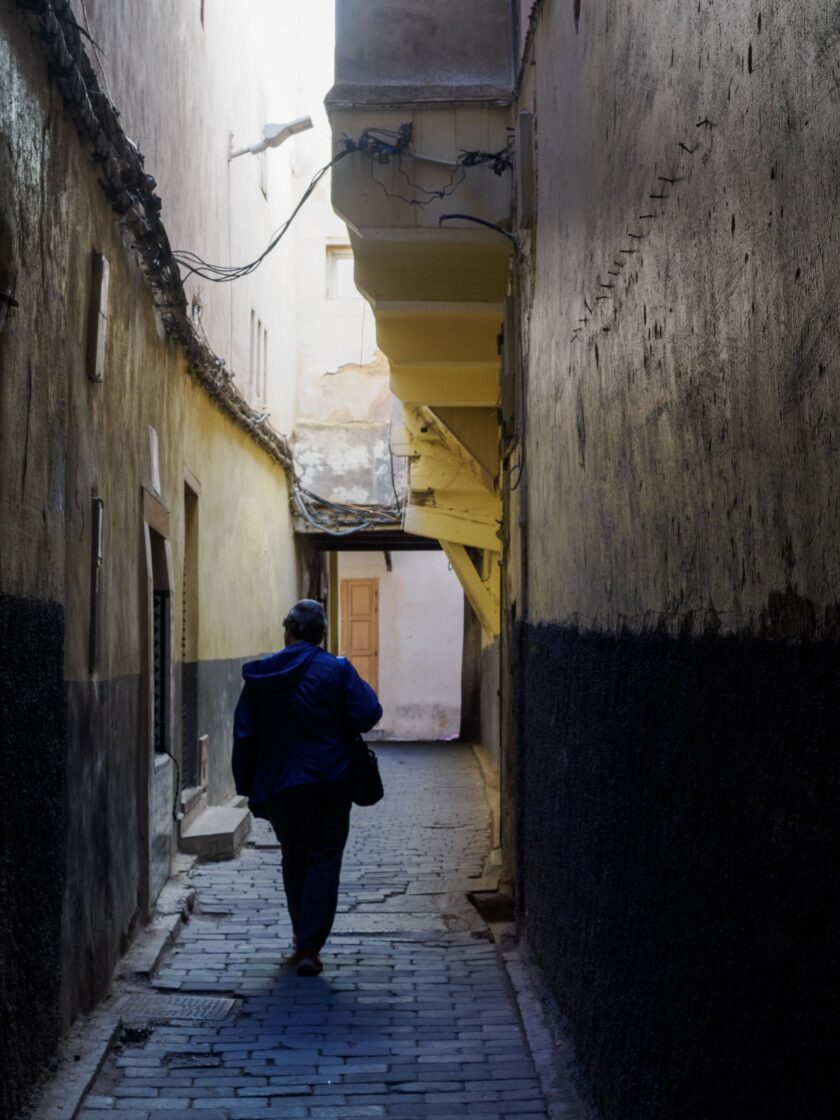
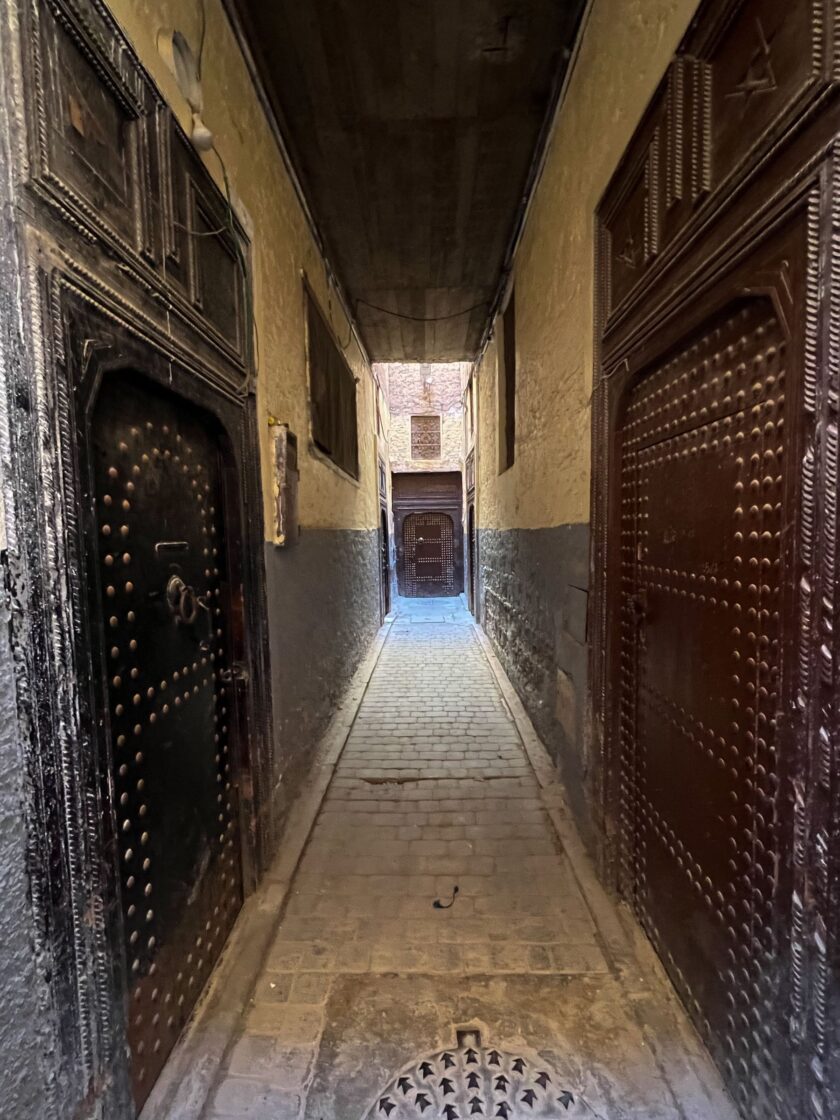
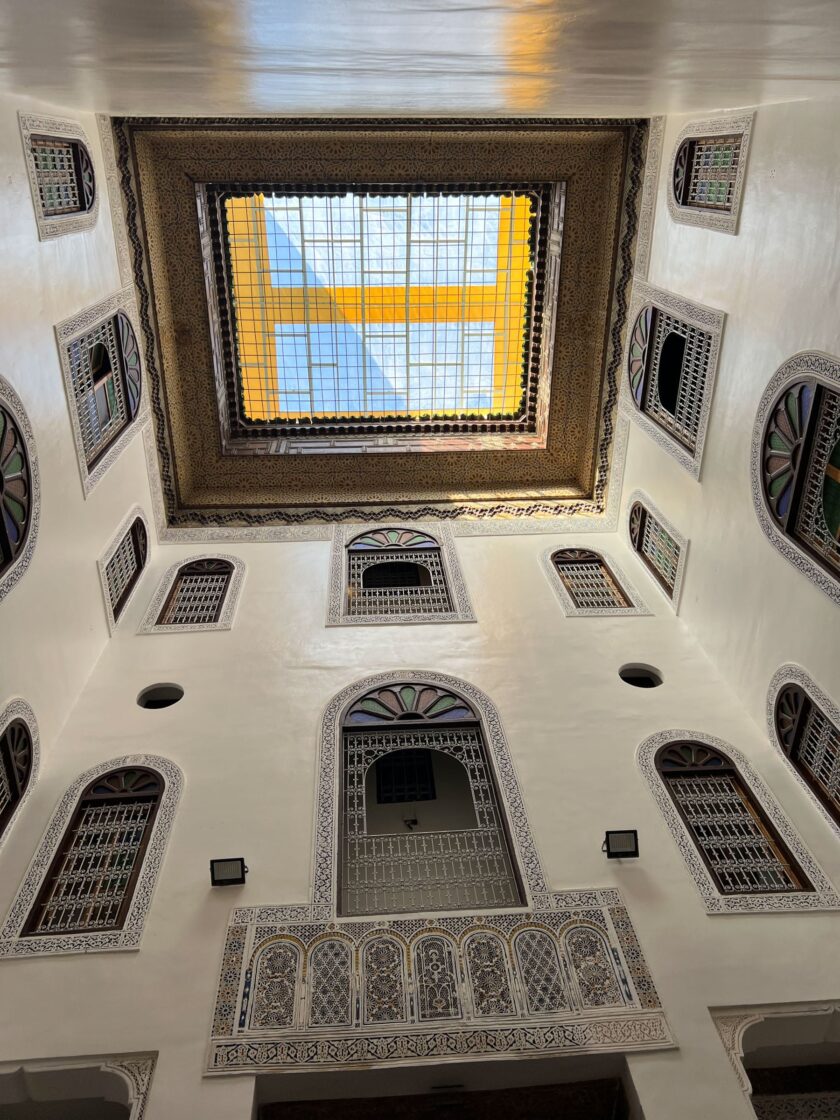
As you walk through the medina’s narrow streets (which feel more like alleys), four- and five-story residential buildings, some with shops on the ground floor, rise up on either side of you in a continuous mass, seemingly holding each other up. Doors are plain, and few windows are visible. Most residential buildings (riads) are constructed around square or rectangular open space that extends from the ground-floor courtyard to the roof. Windows face the courtyard, which provides light, ventilation, and privacy. (Hotels in the medina are usually built in former riads, so it’s almost impossible to find a room with an exterior window.)
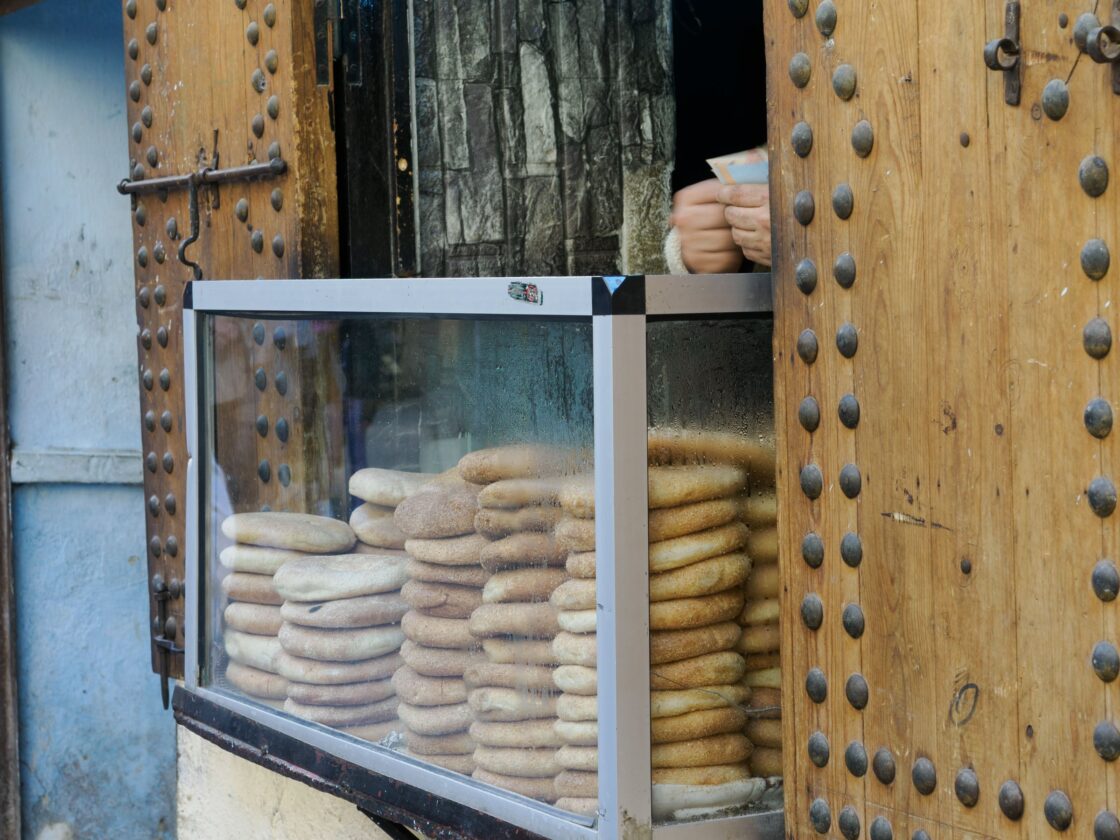
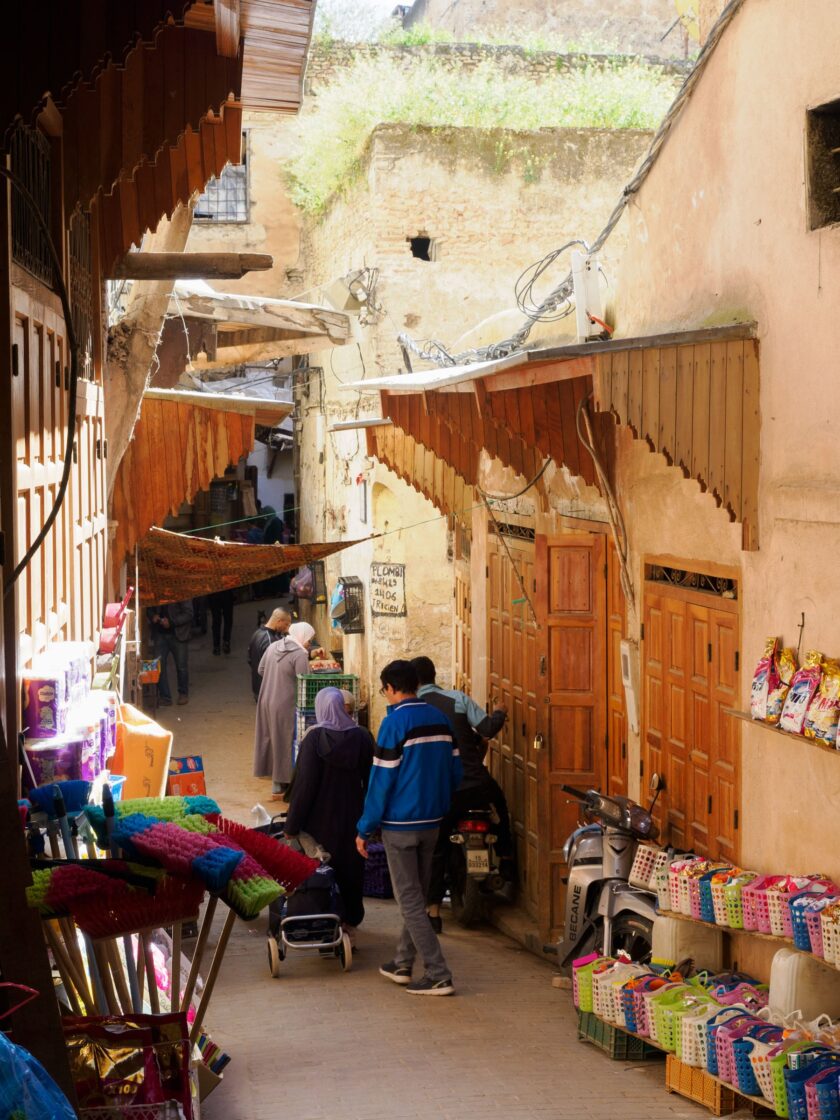
Now and then, residential streets are broken up by arcades of shops (souks), sometimes covered with high lattice roofs that filter the sunlight. Other streets hold clusters of workshops, repair shops, meat markets, produce stalls, or small eateries.
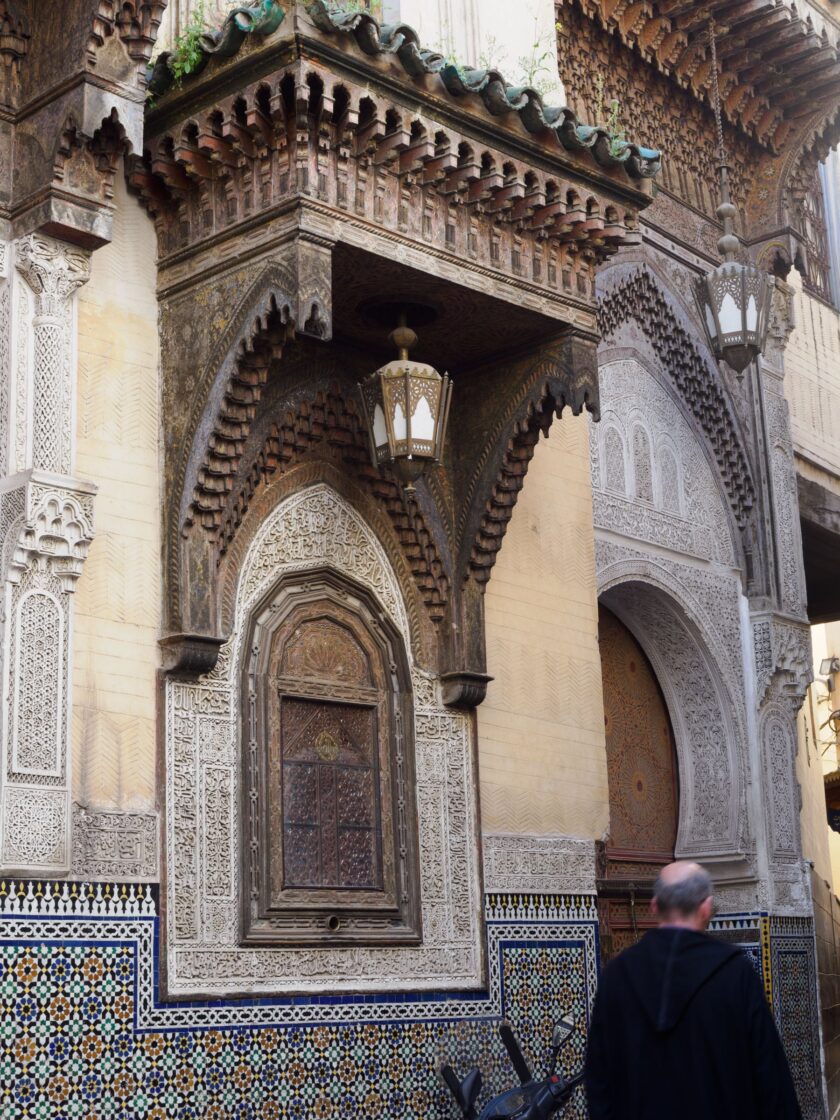
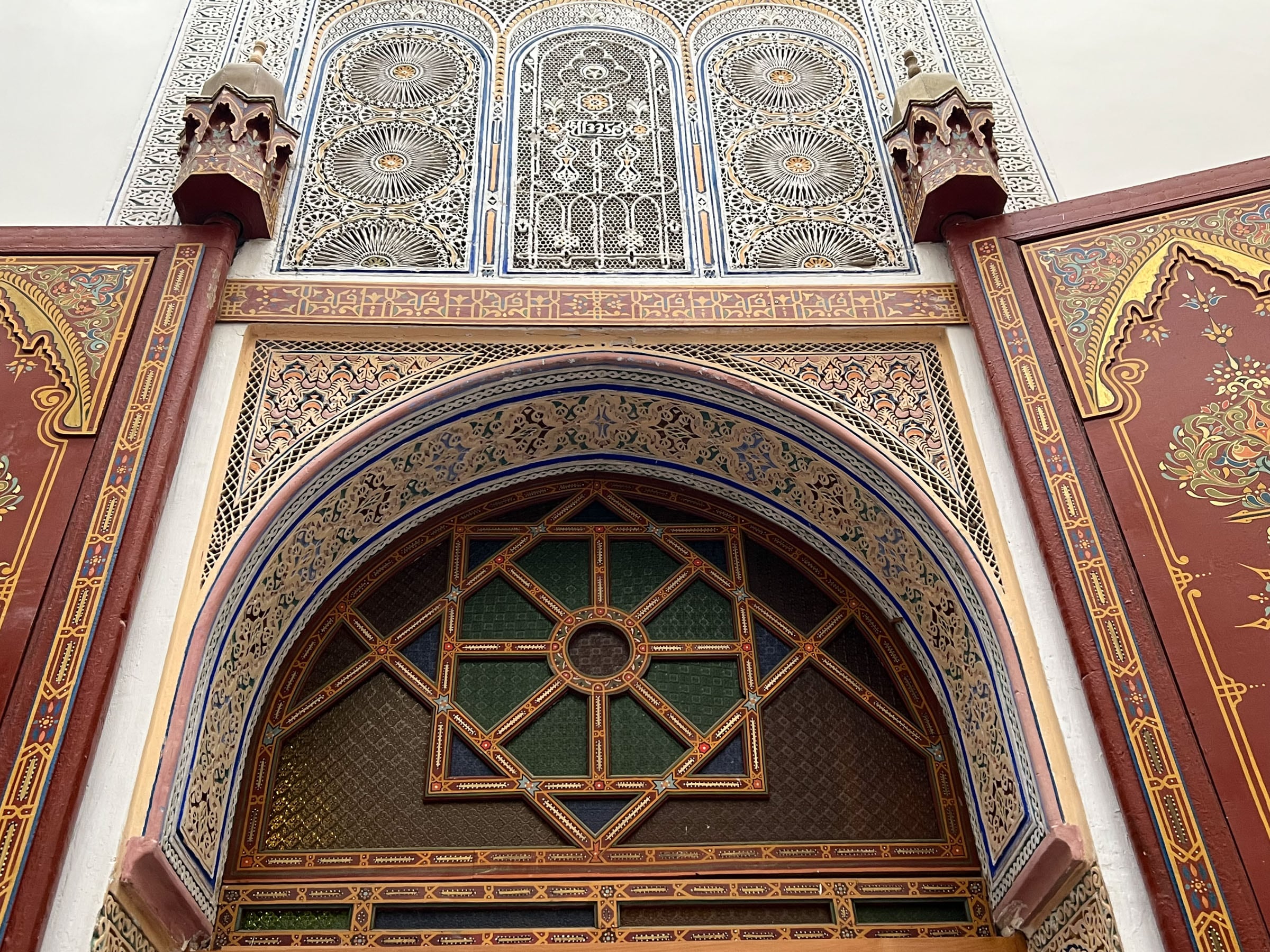
Every so often you’ll pass an ornate arched doorway, and you’ll know you’re at the entrance to a mosque or a religious school or the mausoleum of a local saint (which are often places of prayer). Fes has many such sites, including the University of al-Qarawiyyin, which began as a religious school in the 850s and is one of longest continuously operating educational institutions in the world. You scarcely notice it as you pass by, so thoroughly is it tucked into the fabric of the city.
Parallel Universes
The Fes medina feels like two different worlds, one at street level and one at roof level. The street-level world can be claustrophobic, crowded, confusing, a bit scary in places after dark (though we never had any trouble), fascinating, vibrant, or atmospheric. Even with GPS (when the blue dot can figure out the tangle of alleys), it’s hard to get any sense of your progress around the medina or the lay of the land. Only rarely do you emerge someplace where you can see more than a narrow, alley-wide sliver of sky above you.
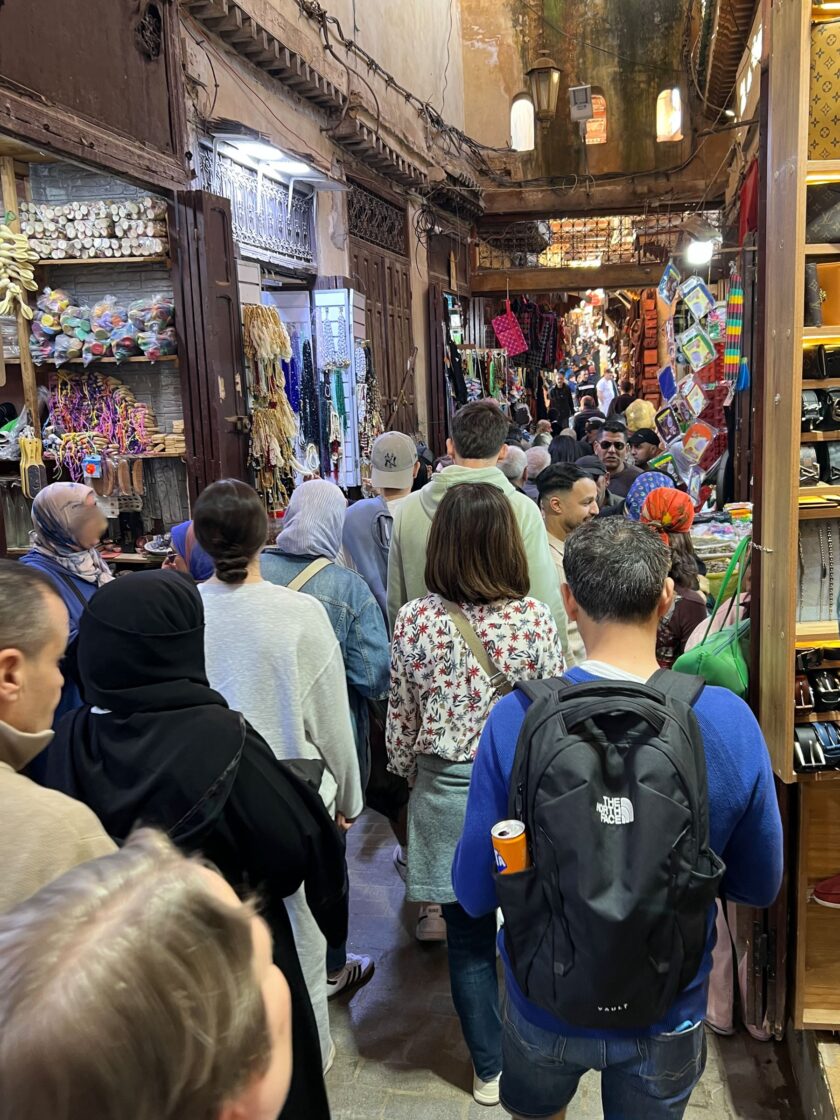
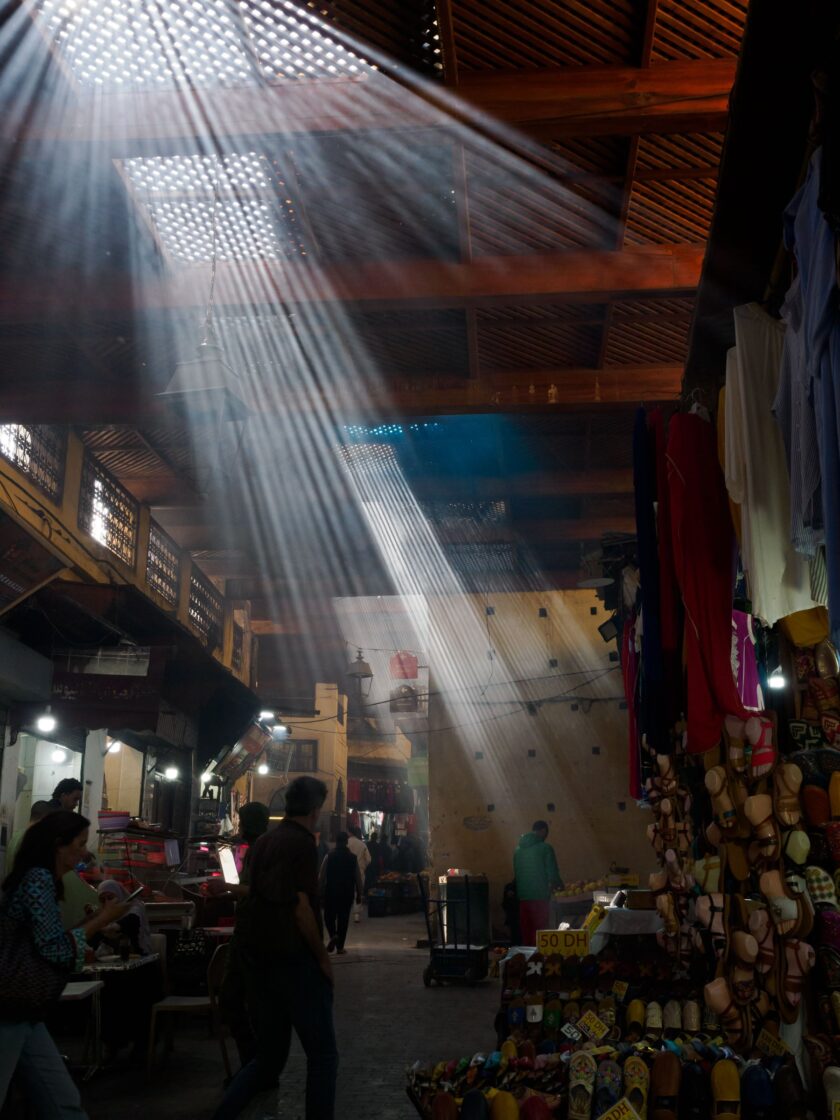
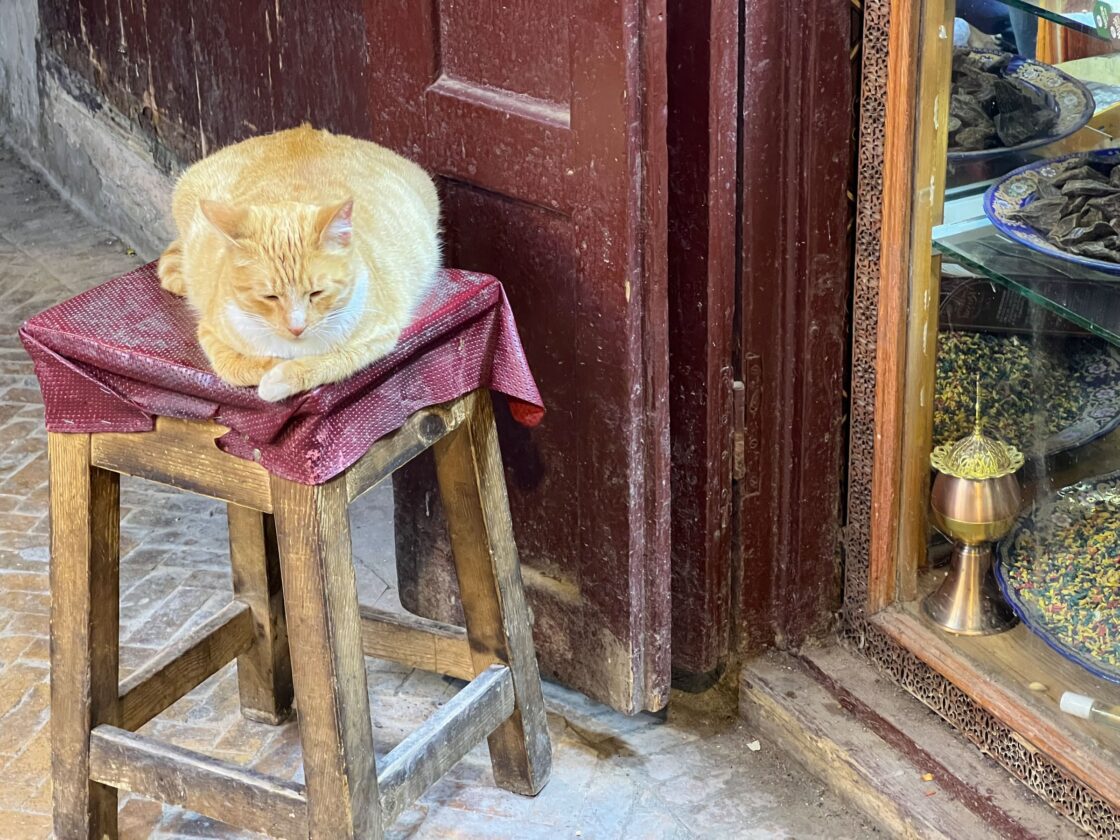
The street-level world is full of shopkeepers, shoppers, artisans, tourists, people going to work or stopping for a meal or visiting the mosque, children walking home from school or kicking a soccer ball, and cats—everywhere cats. They provide endless doses of cuteness to cat lovers. And in a city where bags of trash are put out in the alleys at night for pickup, the cats reportedly do an excellent job of keeping rats and mice to a minimum. (We never saw rodents day or night in any Moroccan medina, save for the occasional dead mouse that mother cats left for their kittens.)
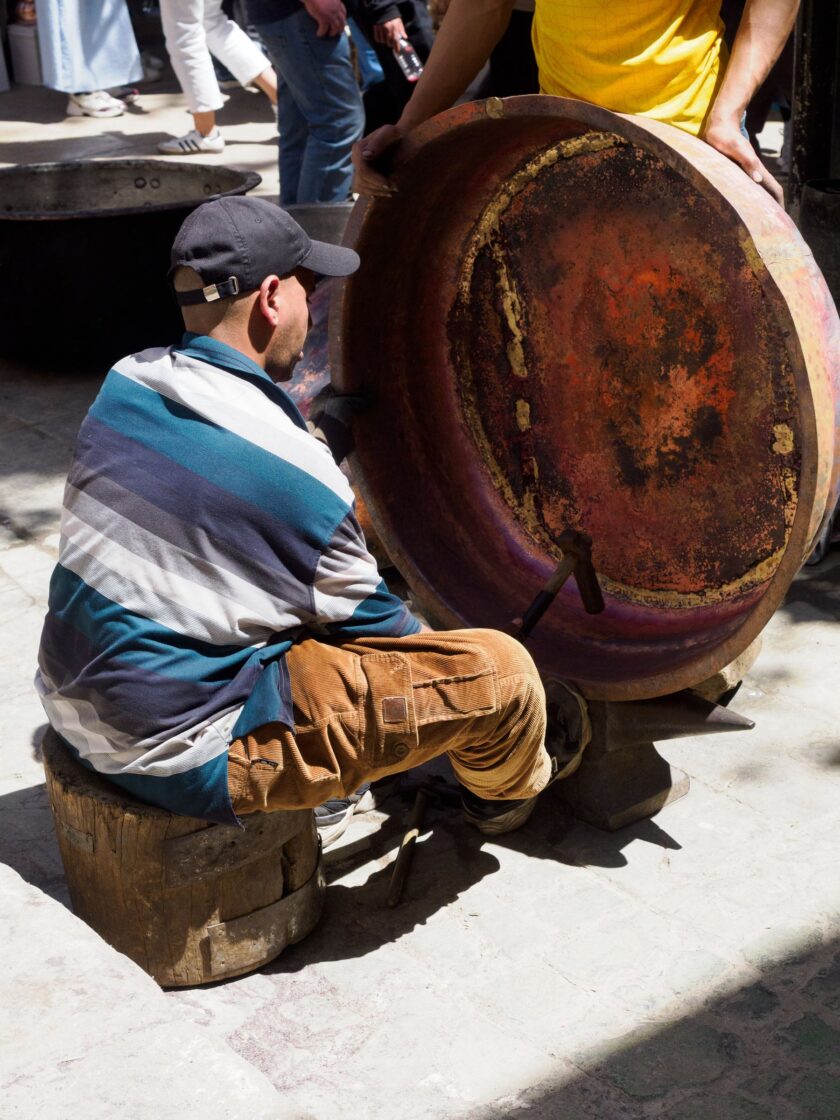
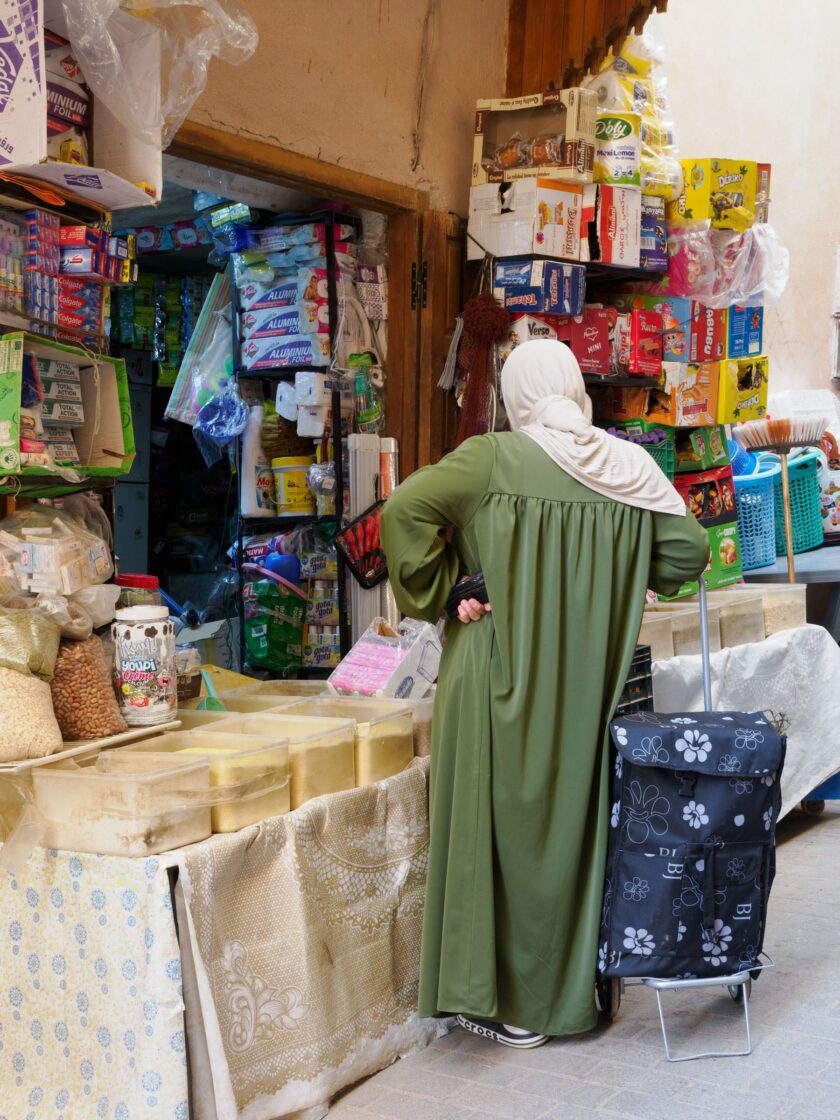
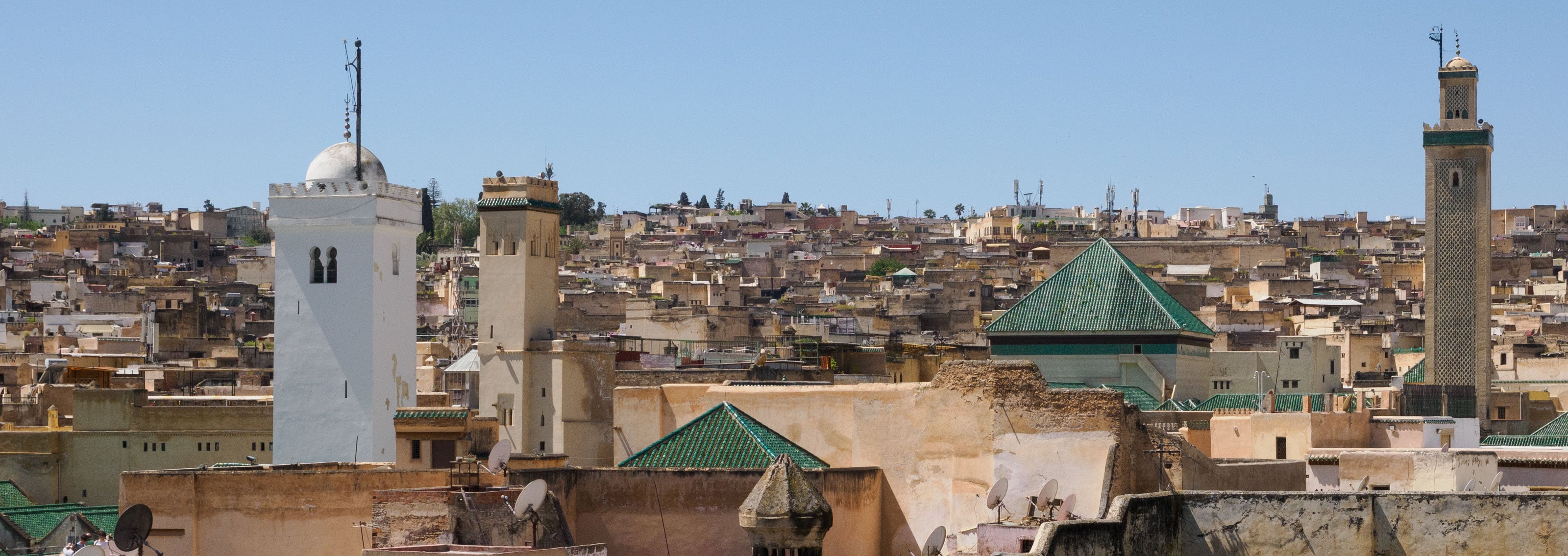
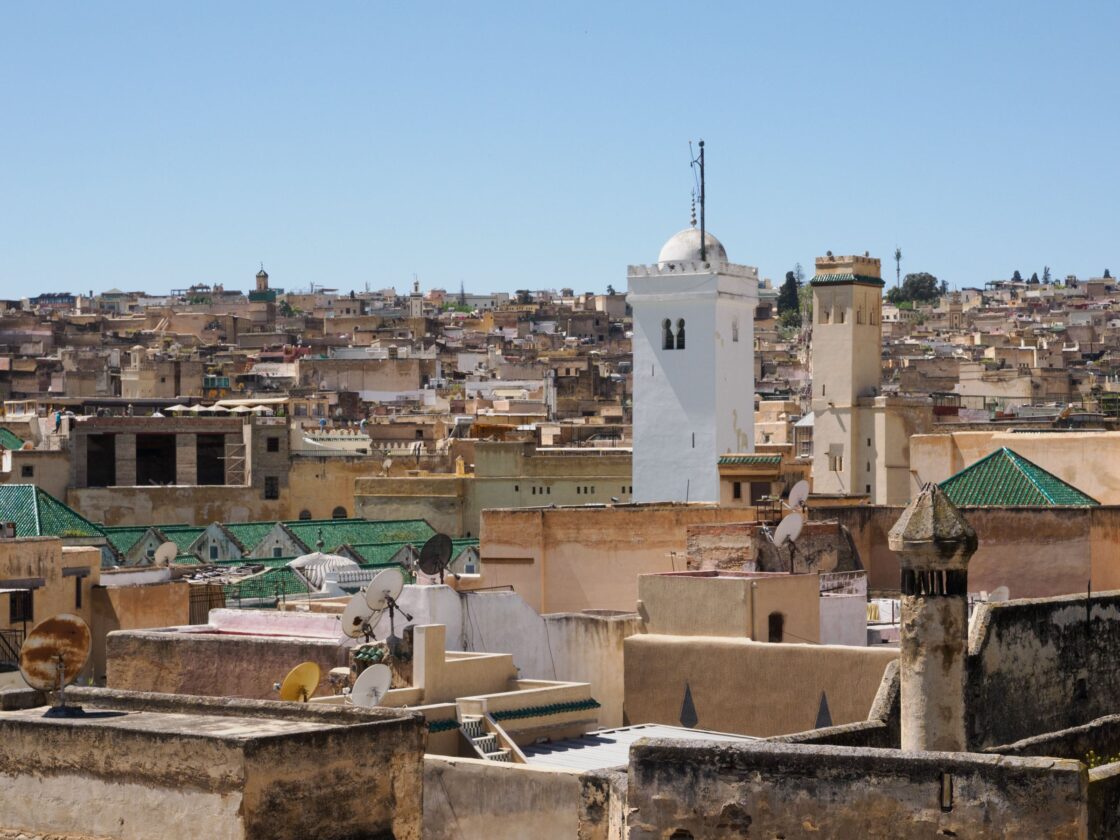
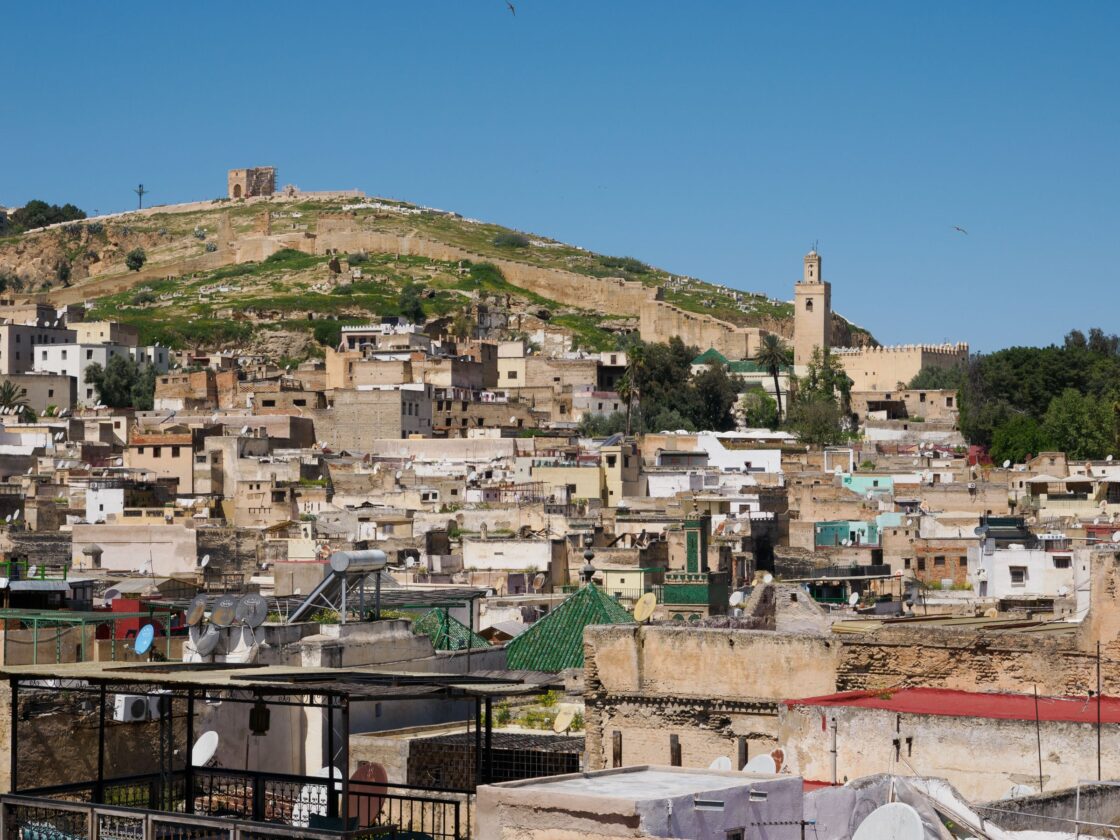
High above the streets is a different world, the realm of balconies and rooftop terraces. This world is a place of sun and open skies, fresh air and breezes, views of the hills and farms surrounding Fes, satellite dishes and water tanks, laundry flapping on lines, minarets poking above the houses, and terraces with tables and chairs belonging to hotels and restaurants.
In the rooftop world, flocks of pigeons circle overhead, and swifts dart between buildings, while higher up, a kestrel hovers or a white stork flies by, patiently flapping its pterodactyl-like wings. Unlike the street-level world, this is not the domain of cats, other than a few house cats sunning themselves on terraces. Reaching the rooftop world usually requires climbing four or five flights of steep, narrow, twisting stairs. We’ve gotten noticeably fitter at stair climbing during our time in Morocco.
Until the second half of the 20th century, women in Morocco above the laboring class were generally sequestered at home. The rooftop world was their special place, where they could breath fresh air and feel the sunshine, hang their washing or just relax outdoors away from male eyes (and thus without the enveloping wraps that tradition dictated they wear when they left the house). Once tourists started flocking to Fes, and restaurants and hotels converted their roofs to panoramic terraces, women’s rooftop world became visible to the public in a way it had never been. I suspect that for some traditional women, a sense of freedom and security was lost.
Highlights of Our Time in Fes
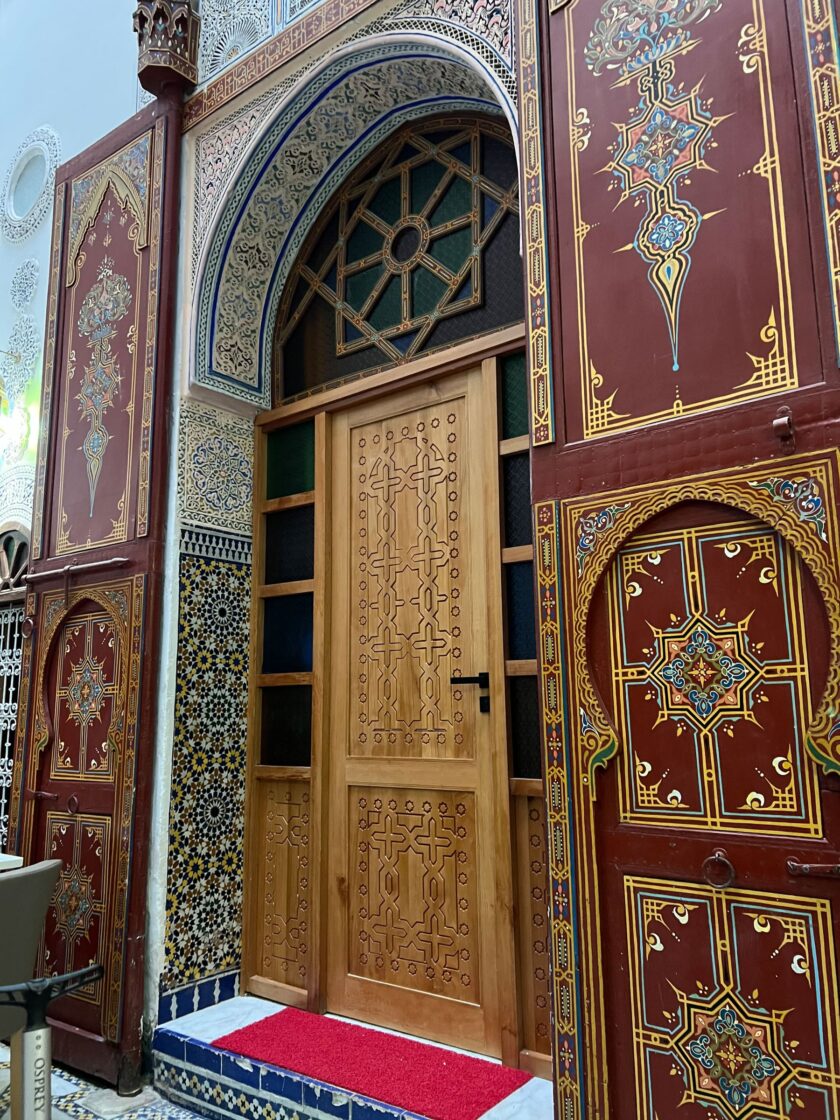
We had many memorable experiences in the Fes medina, but three stand out most intensely. The first was staying in our amazing hotel, Riad Les Émeraudes De Fes. It’s located in a traditional medina house that was renovated in Andalusian-Moroccan style. Our room, on the ground floor off the courtyard, was exquisite: tiled mosaic floors, carved plasterwork on the walls, colored-glass windows, and a high coffered wooden ceiling. It was like sleeping in the Alhambra (for $73 a night, with a comfortable bed and en suite bathroom)! The hotel’s rooftop terrace offered fabulous views over the city and became our favorite spot to recover from the hectic streets.
Our second great experience in Fes was splurging (by local standards) to visit a fancy bathhouse (hammam). Hammams—descendants of Roman baths—are a common feature of everyday life in Morocco. A series of hotter to cooler steam rooms with water faucets and buckets, hammams are where families and friends go to get their skin and hair extra clean (with scrubbing, soaking, and sluicing) and to gossip and relax. Neighborhood hammams have separate hours for men and women, since the washing is generally done wholly or nearly naked.
Some hammams in tourist areas cater to visitors and offer a range of services, from face masks and special scrubs to couples massages. We went to Hammam Ben Abbad in the center of the medina and, for $50 each, spent a blissful hour and a half of cleansing and relaxation. It started in a hot, steamy tiled room, where attendants had us lie down on marble tables and doused us with buckets of warm water. After that, we were scrubbed on all sides from head to toe so vigorously that I was sure I wouldn’t have any skin left. But somehow I did.
After the scrubbing, we were slathered in a thick, gel-like olive oil soap, left to marinate on our warm tables in the misty dimness, and then sluiced with more buckets of hot water to rinse everything off. Hair washing and a 30-minute gentle massage (no deep-tissue stuff) with fragrant oils completed the process.
Our hammam visit included more pampering and less gossiping than the traditional experience. But I left it feeling like a new person. Two weeks later, my feet are still softer and smoother than they’ve been in years.
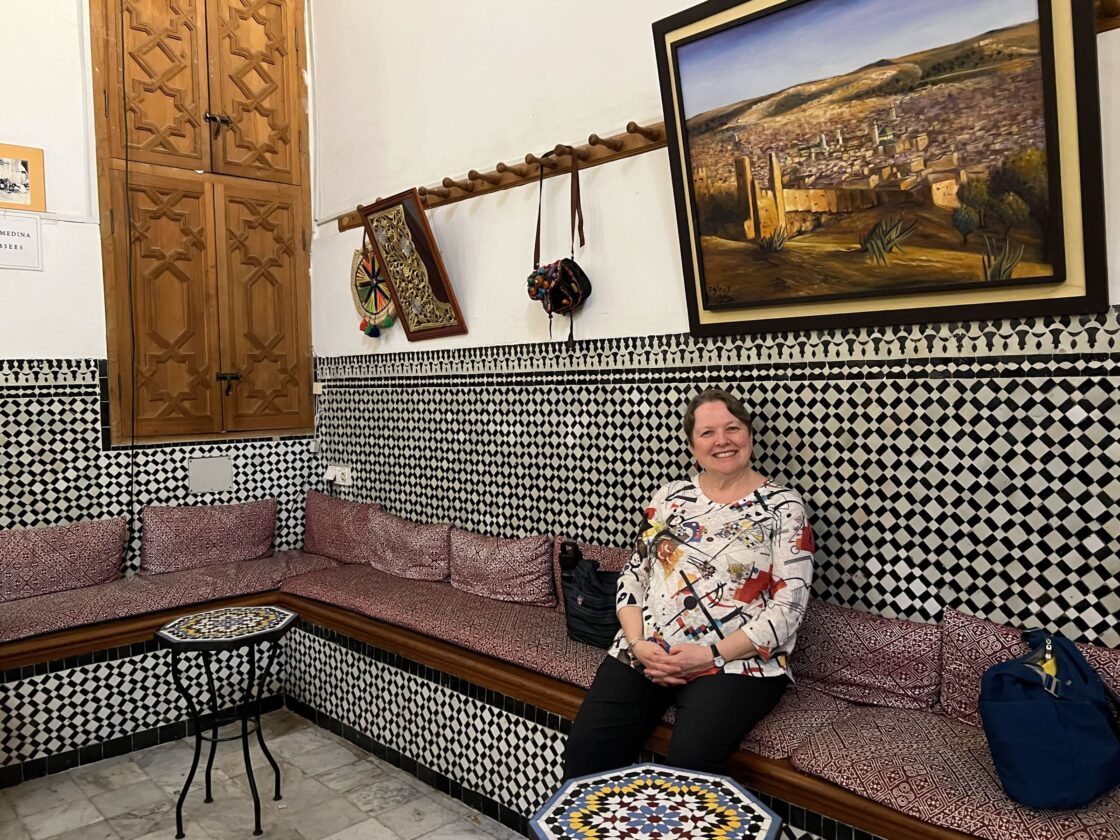
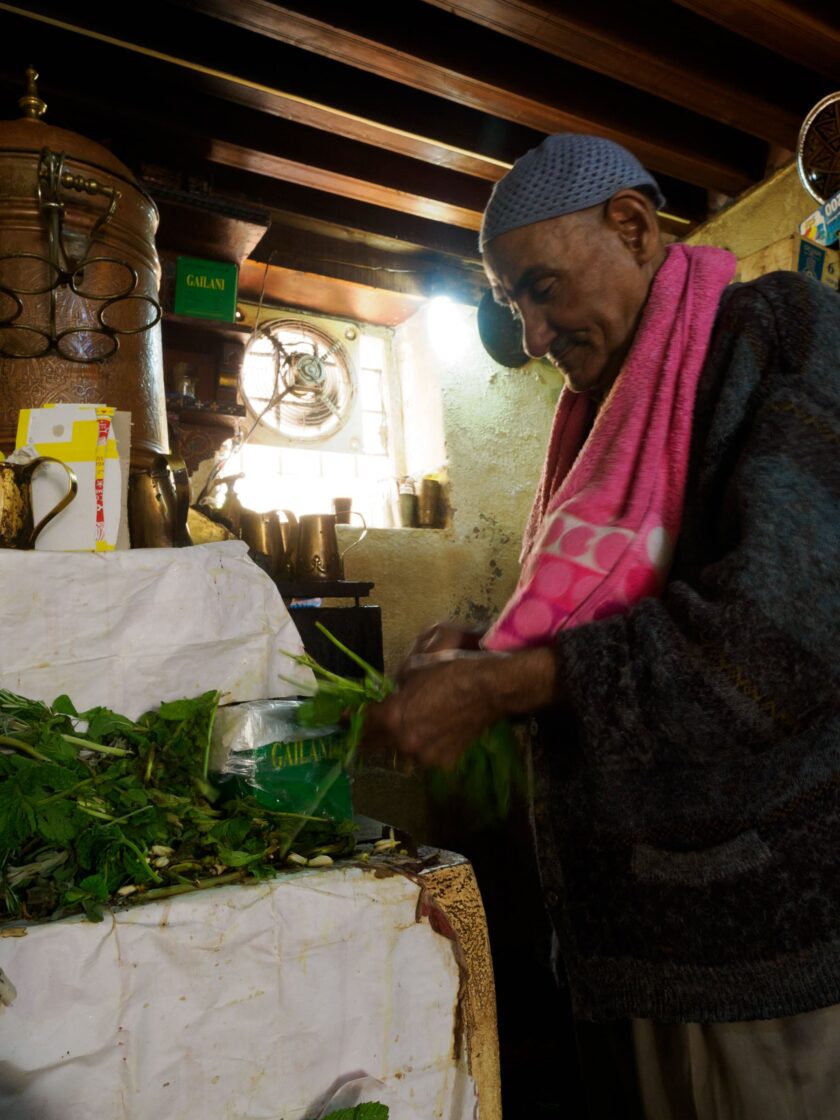
Our third special experience occurred on our last day in Fes, when we took a private three-hour walking tour (in English) with a great guide named Fatima from Fab Fez Tours. Although we’d already been exploring the medina for two days on our own, Fatima showed us all sorts of nooks and crannies we might otherwise have missed. Fatima grew up in a different part of Fes, but she visited her grandparents in the medina every weekend and learned her way everywhere. In addition to giving us lots of interesting information, she took us to some beautiful buildings, artisans’ workshops, and an amazing tiny tea shop up a crazy flight of stairs where a lovely older man made delicious blended teas from bundles of fresh herbs and orange blossoms.
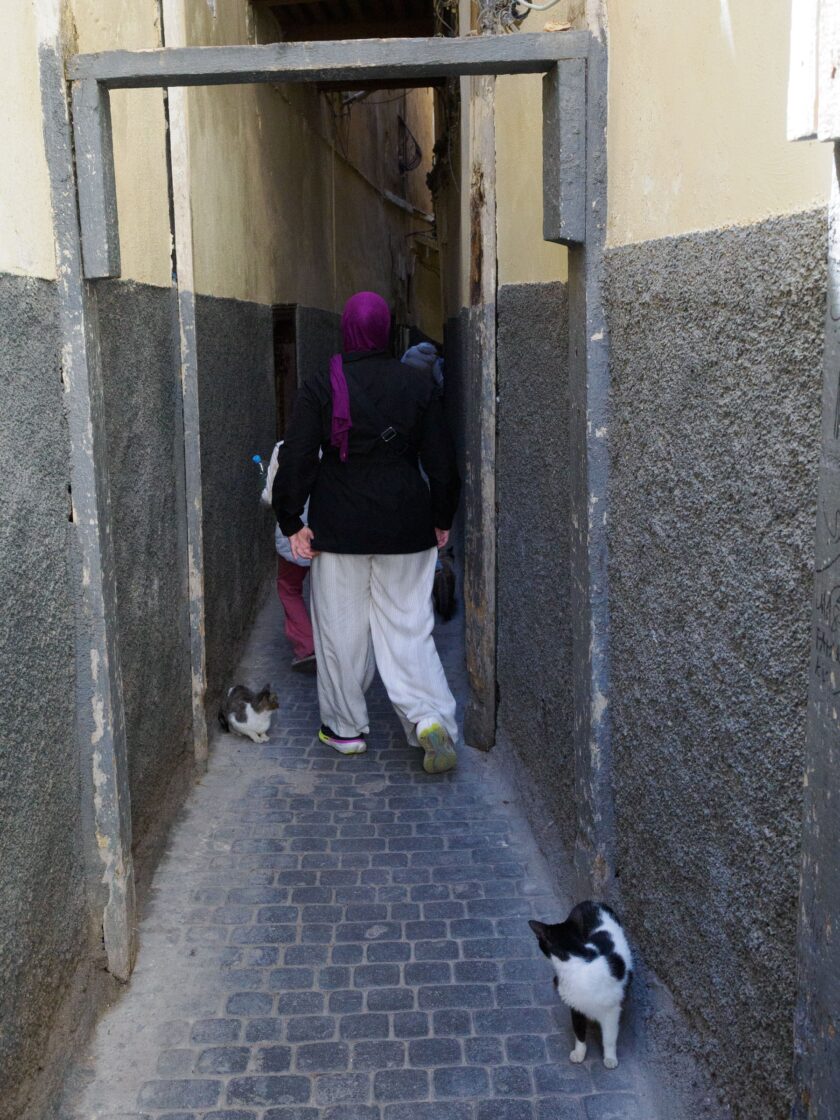
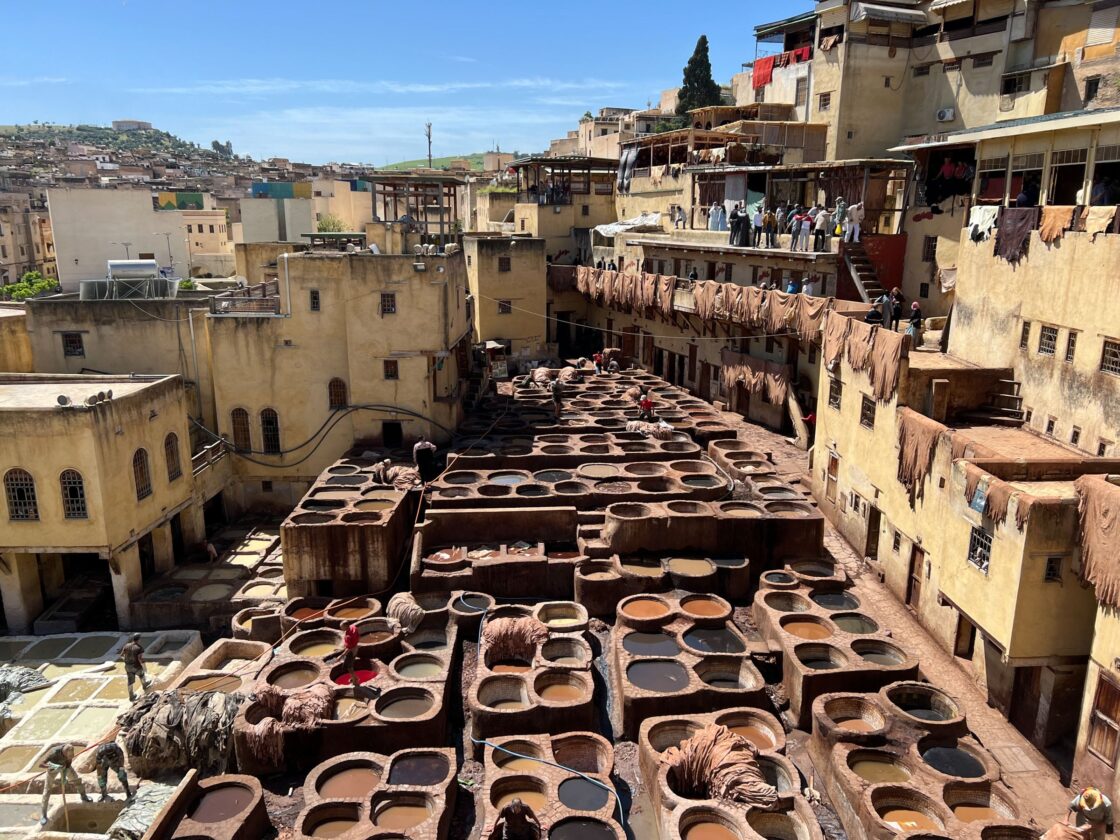
We loved talking with Fatima and hearing about her experiences and challenges as a single professional woman in Morocco. Although her tour was an expensive splurge for us, it was worth the money, especially to support a female-run business in male-dominated Morocco.
Tips for Visiting Fes Medina
If your idea of fun doesn’t include elbowing your way through masses of shoppers or being scrubbed on a marble slab, Fes has two lovely museums that are worth a visit. The Nejjarine Museum of Wood Arts and Crafts is housed in a beautifully restored 18th-century fondouk (a trading center, inn, and warehouse for merchant caravans). Its three floors display beautiful examples of traditional wooden objects and decorations for homes and mosques, as well as old wooden musical instruments and tools. As carpenters might point out, virtually no other type of traditional artisan could function without some equipment made of wood.
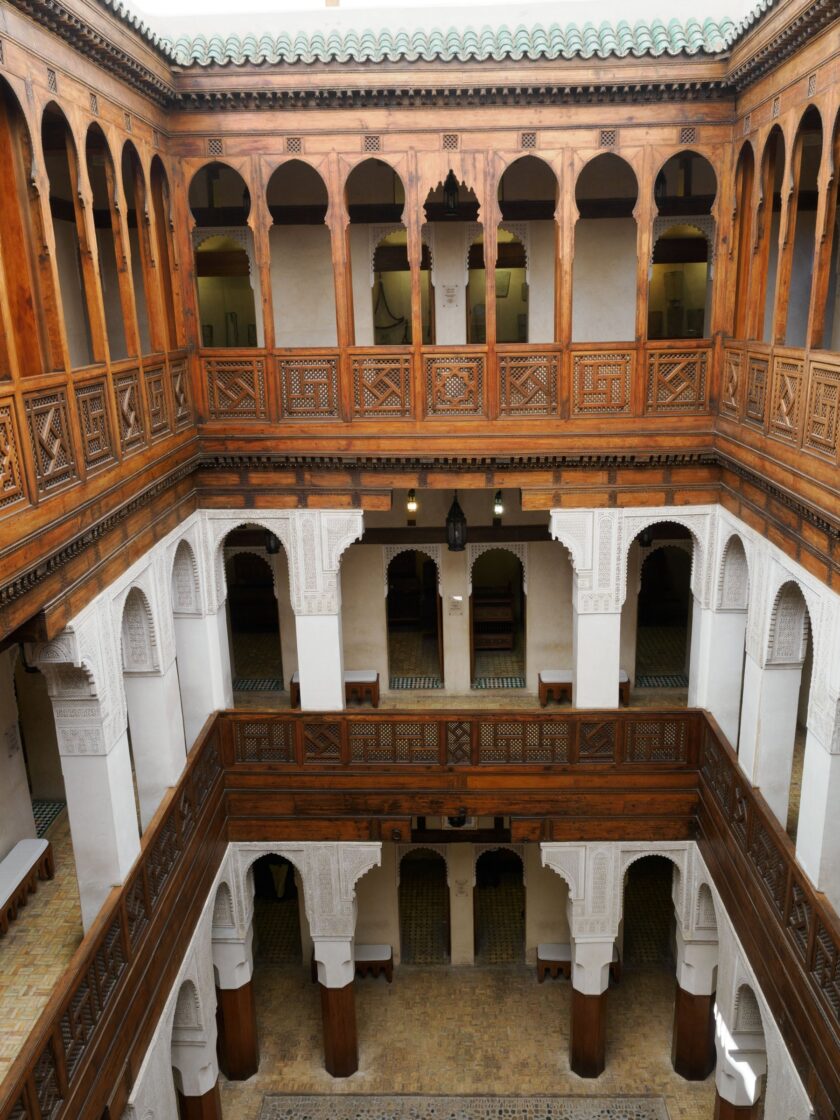
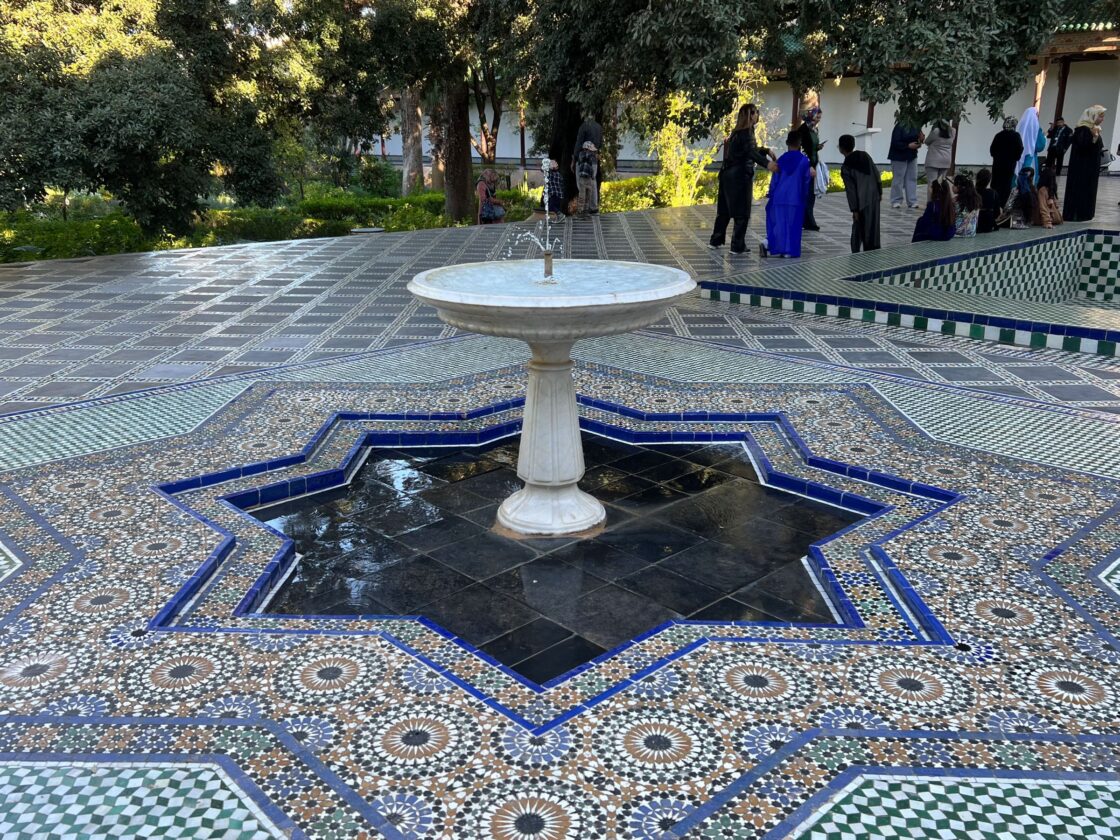
The other museum we loved was the Dar Batha Museum of Islamic Arts. It’s located just outside the medina in a former Andalucian-style palace built in the late 1800s for the sultan of Morocco. The museum displays a range of artifacts and historical artisan work from Fes, everything from scientific instruments to jewelry to ceramics. The building itself is as impressive as the exhibits. (After our visit to the woodworking museum, we had a new appreciation for the intricately carved and painted wooden doors and ceilings of the former palace.) The museum also has a lush green garden that’s a cool oasis on a sunny day.
If you’re daunted by the medina, there are hotels in the newer parts of Fes. But most of the city’s interesting sites are in the medina, so if you stay elsewhere, you’ll need to walk long distances or haggle with the city’s unscrupulous taxi drivers. Staying at a riad in the medina will give you a better feel for this old and fascinating place.
As women, we were sometimes nervous about walking back to our riad down dim or empty alleys after dark. But we never had any problems (we were rarely out past 9 p.m.). Many hotels in the medina offer to send someone to accompany you if you get lost or don’t feel comfortable walking back by yourself at night. It was nice to have that service available if we needed it—and nice to know that although a residential alley might look deserted after dark, there was a family behind every door.